The +0.2% headline everyone quoted was hiding the real story. Cheaper gas dragged nominal sales down while the consumer — and your tenant base — kept spending. Here’s the owner’s read on June’s data and what it means for your financing math.
The Census Bureau’s June retail sales report landed Thursday, and the number making the rounds was a sleepy +0.2%. Total retail and food-services sales reached $768.6 billion. On its face: flat.
But that headline is hiding the story that actually matters for anyone who owns strip retail.
The number under the number
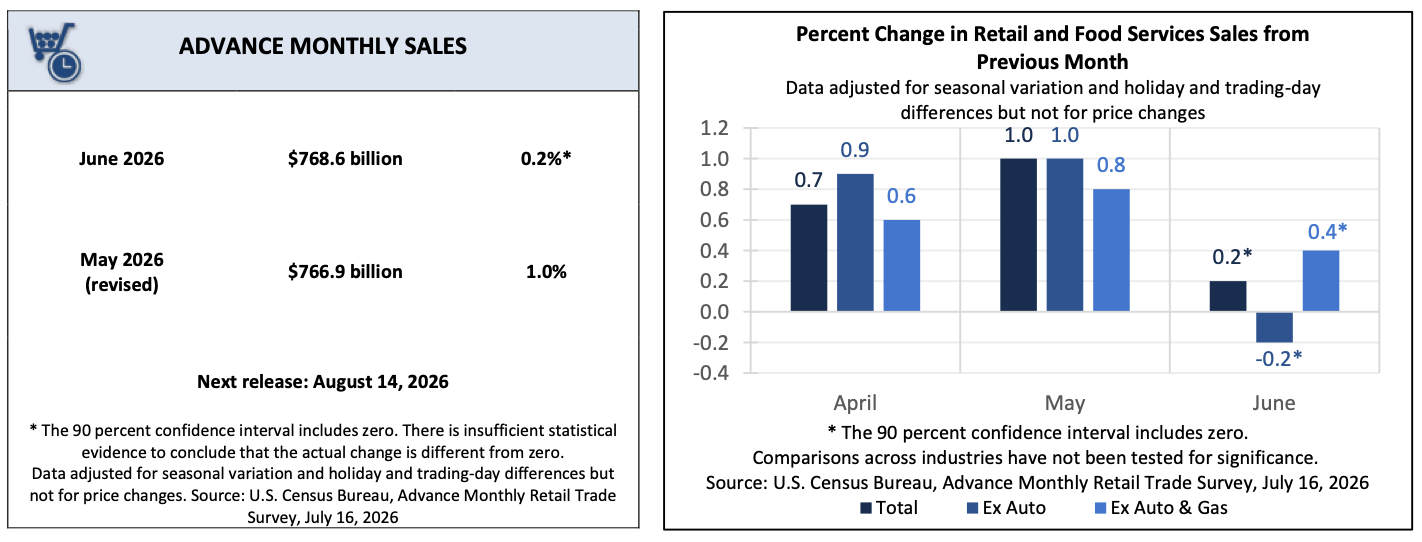
The thing dragging June’s headline down was gasoline. Pump receipts fell more than 5% — because gas got cheaper, not because anyone stopped driving. Strip that out and the picture flips. Sales excluding gasoline rose 0.7%. Excluding both autos and gas, 0.4%. And the “control group” that economists feed directly into GDP rose 0.5%, its sixth consecutive monthly gain.
The honest read isn’t “the consumer stalled.” It’s “the consumer kept spending, and cheaper fuel freed up the wallet to do it.” A falling headline driven by cheaper gas is a tailwind for your tenants, not a warning sign — every dollar not spent at the pump is a dollar that can move to the nail salon, the taco spot, the pet store in your center.
Where the money went — and why it matters for strip

Follow the dollars into the categories that fill a modern strip center. Food services and drinking places sit 3.8% ahead of a year ago. That’s the single services line in the entire retail report, and it’s the exact tenant type leasing unanchored strip space today.
The tenant mix in strip retail has tilted hard toward food, service, and experience — restaurants, fitness, medical, beauty, pet. The stuff you can’t click and ship. When restaurant spending is still climbing year over year, that’s your rent roll signaling it can absorb renewals and modest rent bumps. It’s also why well-located strip has been the quiet outperformer of this cycle.
Practical move for a hold-period client: pull your tenants’ sales reporting where your leases require it. If their comps track the national food-services trend, you’ve got leverage on renewal terms and a cleaner story at disposition.
The financing picture behind it
The consumer’s fine. What about the cost of money?
Two days before the retail report, June inflation came in — and it cooled hard. CPI fell 0.4% on the month, the largest one-month decline since April 2020, driven by the same energy plunge. Annual inflation eased to 3.5%, below what forecasters expected, and core inflation was flat.
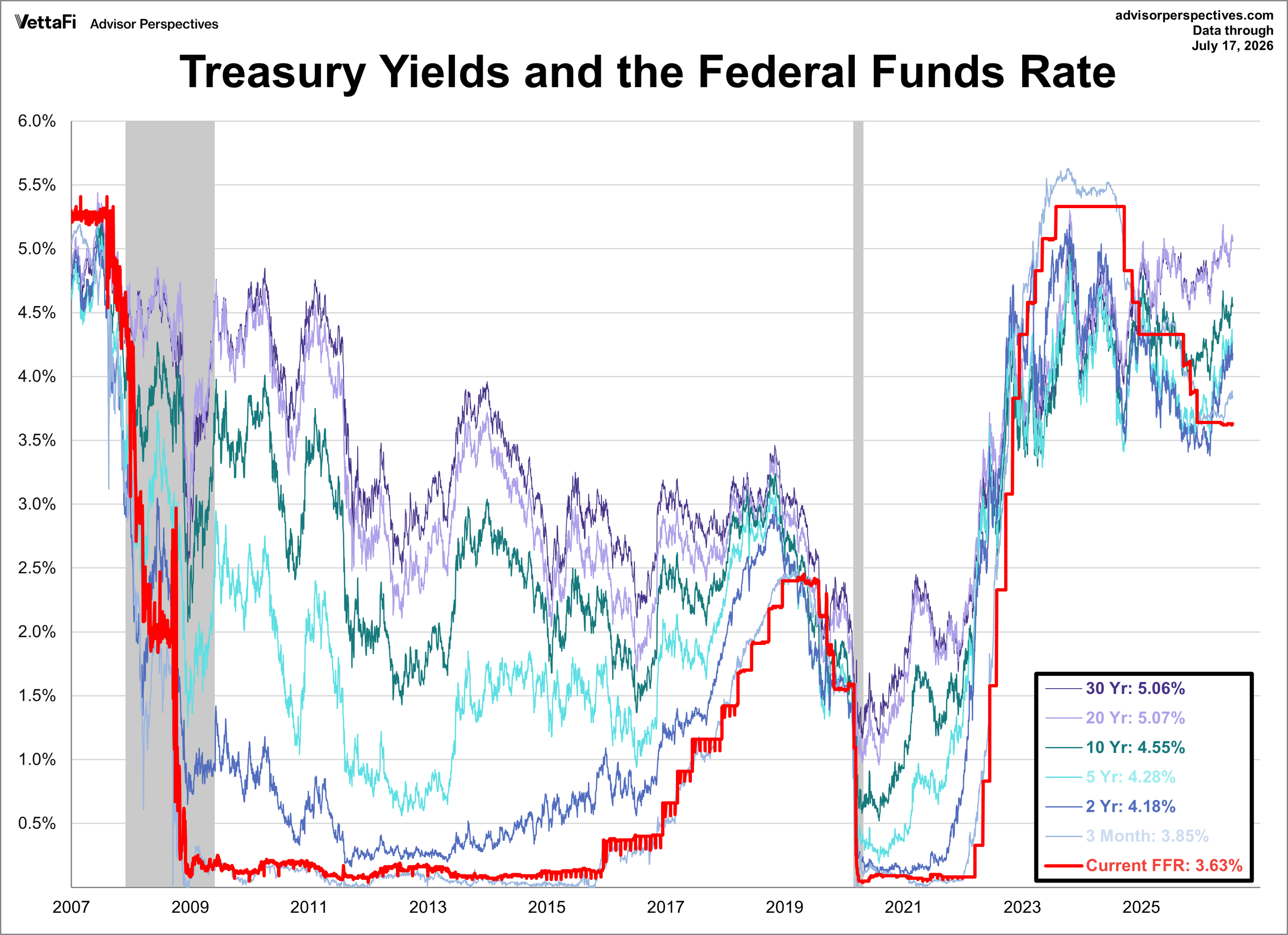
The bond market responded. The 10-year Treasury had spiked to a two-month high of 4.62% midweek, then settled back to roughly 4.55% by Friday as the soft print pulled yields down. The Fed is still expected to hold at this month’s meeting, and futures trimmed the odds of a later hike — but didn’t erase them. This is a market that got one good inflation report and isn’t yet convinced.
Run the math the way an owner should. Take the 4.55% 10-year as your base, add a retail lender spread of roughly 175 to 225 basis points, and acquisition or refinance debt is pricing in the low-to-mid 6s. On a strip deal, that’s the number setting your debt-service coverage and cash-on-cash. A softer inflation trend that keeps the 10-year from running back toward 4.6% and beyond is what protects that math between now and your next loan conversation.
The bottom line
Don’t let the flat headline fool you or your buyers. The consumer kept spending, cheaper gas freed up the wallet, restaurant and service demand — your tenant base — is still climbing, and the financing backdrop got a little friendlier. That combination is a good week for strip retail.
If you own centers in San Antonio, Austin, or the Rio Grande Valley and want to know what this means for your rent roll or your next move, that’s the conversation I have every day. Reach out.
Ray Kang, CCIM specializes in retail strip center investment sales across San Antonio, Austin, and the Rio Grande Valley.