Split Screen: Your Debt Got More Expensive and Your Rent Roll Got Better
Retail Weekend Wrap-Up | Week of July 18–25, 2026 | Ray Kang, CCIM
This was an unusually loud week in the data. If you only caught the headlines, you almost certainly came away with half the picture.
The short version: the cost of borrowing against your center went up meaningfully this week. The quality of the income coming out of your center went up more. Almost no one covered the second half of that sentence.
Both halves are below, along with the deal math that connects them.
The week rates broke out
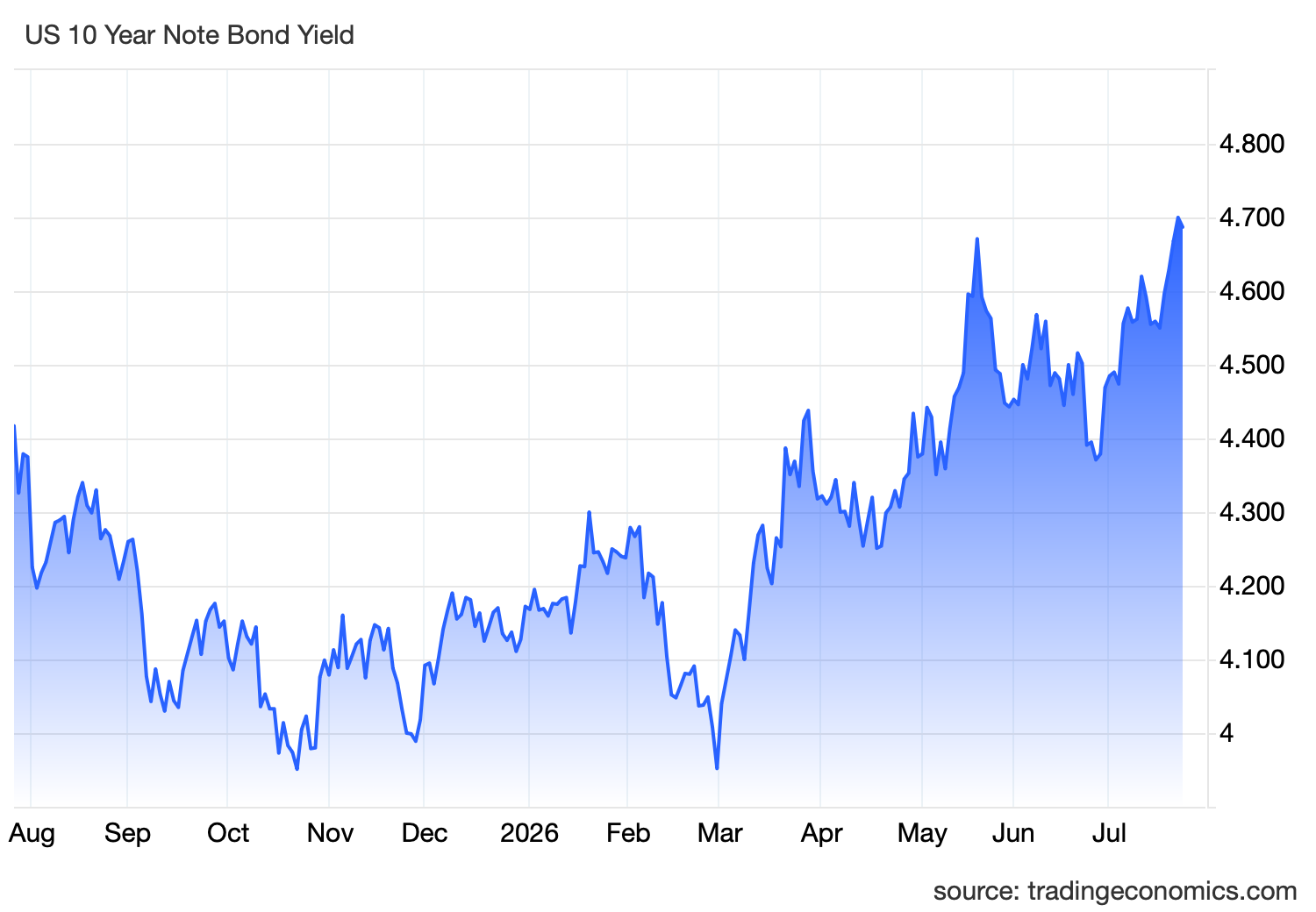
The 10-year Treasury closed Friday at 4.69%, with the 2-year at 4.33%. That was the fifth consecutive session of gains and the highest the 10-year has traded since January 2025.
Three inputs pushed it there, and it's worth separating them because they behave differently over time.
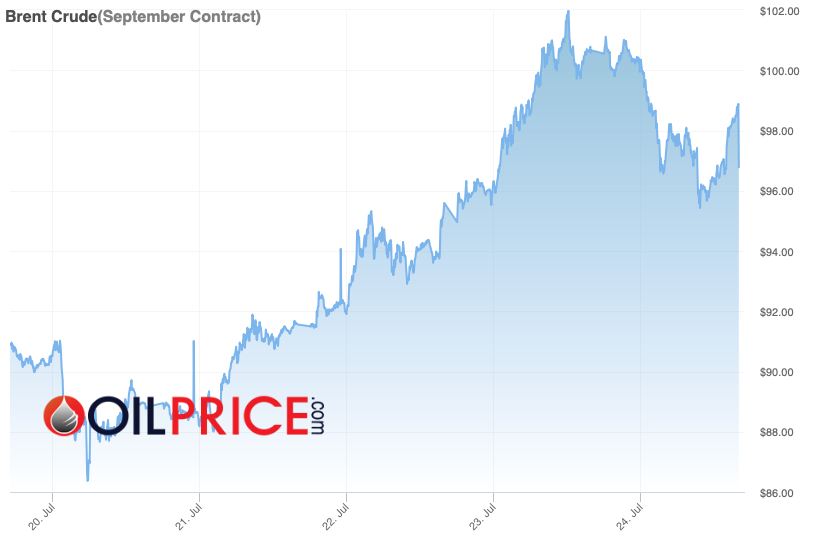
Energy. Brent crude traded around $97 a barrel Friday morning — roughly $27.50 above where it sat a year ago — after topping $100 on Thursday.
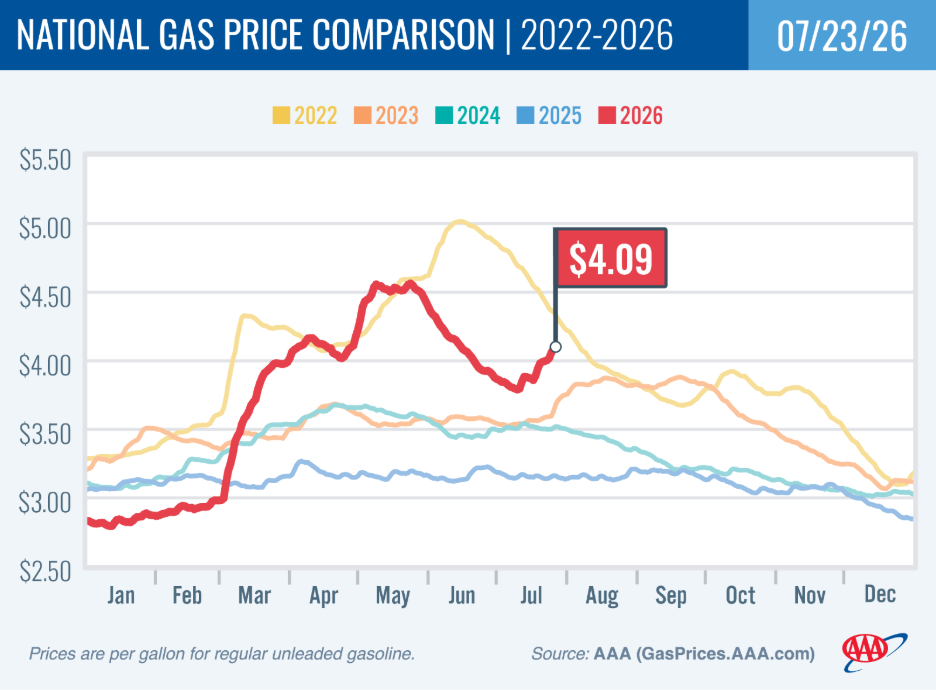
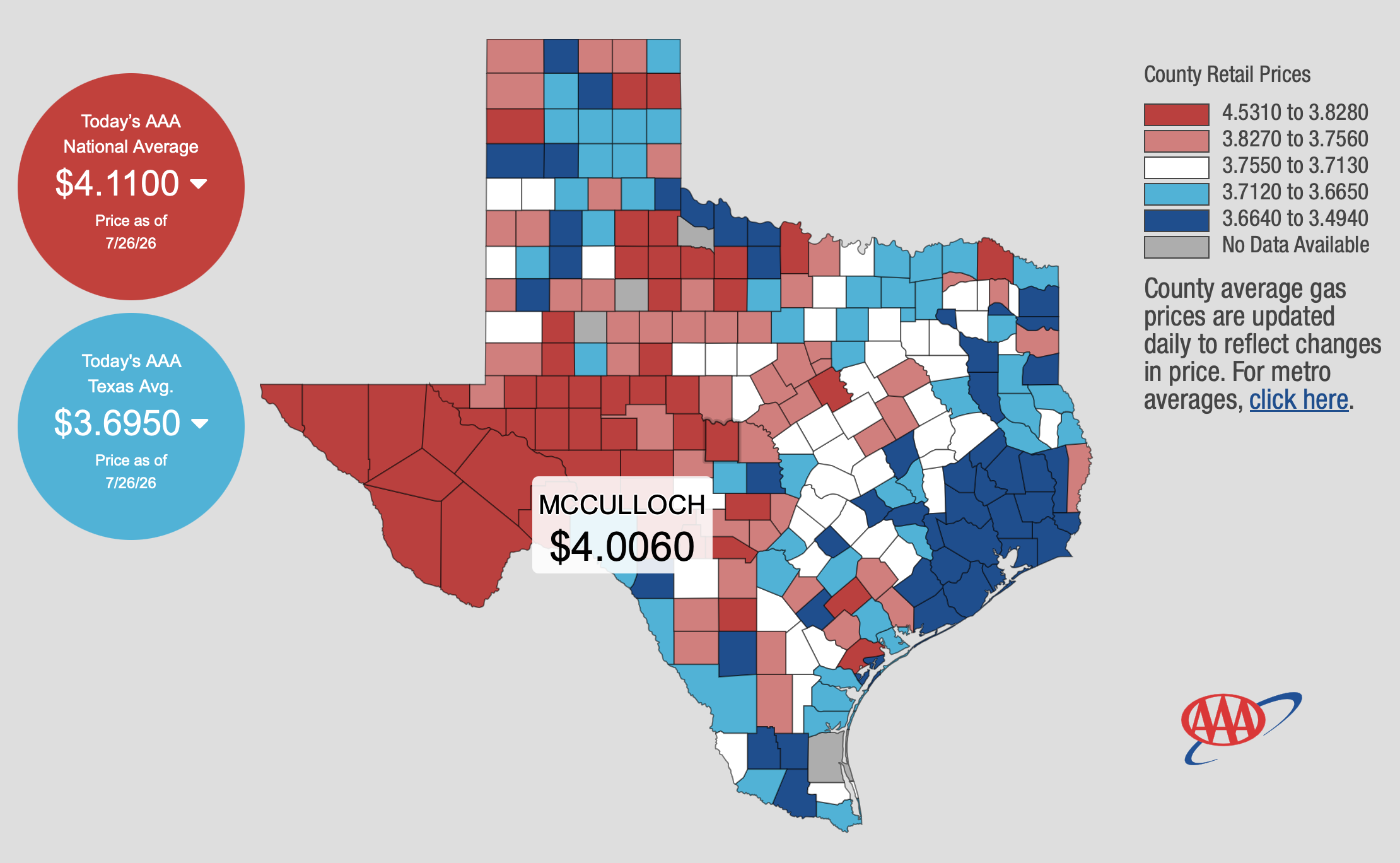
The pump. AAA reported Thursday that the national average for regular gasoline jumped 15 cents in a single week to $4.09. Most states are now averaging four dollars or more. Texas came in at $3.70, fifth cheapest in the country. That number returns at the end of this piece.
The input most coverage skipped. Friday's flash PMI from S&P Global put U.S. business activity at an eight-month high — the composite index at 53.6, with services jumping from 51.2 to 53.6. Read in isolation, that's a strong economy. But the same release showed selling prices rising at their fastest rate in nearly four years.
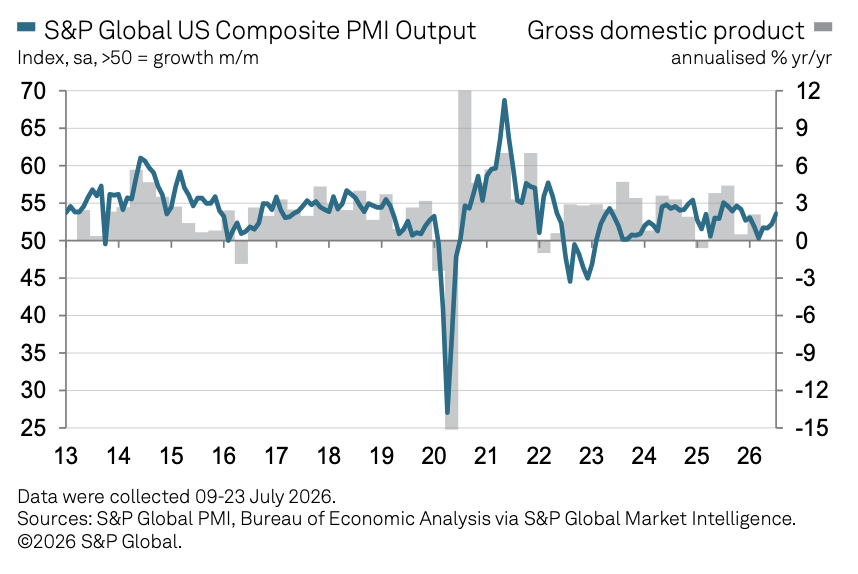
Read together, those two facts are the story: the economy is accelerating and companies are raising prices faster than they have since 2022. That is not a combination that gives a central bank room to ease.
Which sets up Wednesday. The FOMC meets July 28–29, and consensus is a fifth consecutive hold at 3.50%–3.75%. But the energy move pushed markets to roughly a one-in-three chance of a hike at this meeting, and close to 80% odds for September. There is no Summary of Economic Projections at this meeting — only the statement and Chair Warsh's press conference. And Warsh has been consistent that he intends to give markets less forward guidance, not more.
The honest read is that nobody knows what Wednesday produces, quite possibly including the people voting on it.
Two rates, two different jobs
Before the deal math, a framing note — because there are two rates that matter to a strip center owner this week, and they do completely different things.
RateLevelWhat it prices10-Year Treasury4.69%Your next loan — acquisition, refinance, permanent debtPrime6.75%Your current loan — lines of credit, TI and capex facilities, bridge and mini-perm, SBA 7(a)
Here is what is worth noticing. Prime sits at 6.75% and has not moved in five meetings. The 10-year just climbed 14 basis points in a single week.
So if you hold both fixed and floating paper right now, your refinance quotes have been rising all year while your floating debt service has stayed flat. That feels like a contradiction. It is not.
The two rates answer to different masters. The 10-year answers to what the bond market thinks is going to happen — it moves every day, on expectations. Prime answers only to what the Fed actually does. It is a step function: it sits perfectly still, and then it jumps.
Which makes Wednesday a very different event depending on which side of that board you are standing on.
A move in the 10-year only bites at acquisition or refinance. It is a future-loan problem. But if the Fed delivers the hike currently priced at roughly one in three, prime goes to 7.00% overnight — and it lands on your next statement. That affects anyone carrying:
A line of credit
A TI or capex facility
Bridge or mini-perm paper on a lease-up
A smaller community bank loan written over prime
SBA 7(a) debt
That last category carries a second-order effect worth understanding. SBA 7(a) is how a large share of owner-users finance acquisitions. When prime moves, it changes what an owner-user can afford to pay for a small center — which changes the competing bid pool on your disposition. Indirect, but real, and it surfaces in the best-and-final round.
One caveat: if your floating debt is indexed to SOFR rather than prime — more common on larger bank paper — the mechanic is the same, the index is different. Either way, confirm which one is actually written into your loan documents before Wednesday afternoon.
Sort your debt into two buckets this weekend: fixed and floating. The Fed meeting is an immediate event for one of them and a future event for the other, and most owners have not organized their debt that way.
What the fixed-rate side actually costs you
This is where most acquisition and refinance conversations live.
Retail strip center debt is currently pricing at roughly 175 to 225 basis points over the 10-year. At 4.69%, that puts loan rates between 6.44% and 6.94%. Last Friday, the identical math produced 6.30% to 6.80%.
Here's what that looks like on a $3,000,000 loan with a 25-year amortization:
Loan rateAnnual debt service6.30% — last Friday, low end$238,6006.44% — this Friday, low end$241,7006.94% — this Friday, high end$253,1007.19% — one 25 bp hike from here$258,800
One week of bond market movement added roughly $3,100 per year to the identical loan. Not catastrophic on its own — but moving the wrong direction.
The number worth committing to memory: every 25 basis points on a $3 million loan costs about $5,600 a year. If September delivers the hike markets are currently pricing and lender spreads hold, that's your increment.
Now run it as a complete deal. Assume a $4,600,000 center producing $322,000 of NOI — a 7.0% cap rate. Put 65% debt on it for a $3,000,000 loan, with roughly $1,700,000 of equity in after closing costs.
Loan rateDebt coverage ratioCash-on-cash return6.44%1.334.7%6.94%1.274.1%7.19%1.243.7%
Fifty basis points of loan rate costs approximately 66 basis points of cash-on-cash return. That's the mechanic worth internalizing. In this environment, it usually isn't the cap rate that breaks a transaction — it's the debt constant.
If your debt matures inside 18 months, the operative question is not whether rates come down. It's whether your coverage still works if they don't. That is a calculation for this week, not next quarter.
The other half of the screen
Here is the part that did not get covered.
Phillips Edison reported second-quarter results Thursday. They own 330 grocery-anchored shopping centers totaling 37.4 million square feet of gross leasable area. When they report, private owners get a clean read on the same tenant categories that fill their rent rolls.
The quarter:
Leased portfolio occupancy: 97.3%. In-line occupancy — the small shop space most comparable to a private strip center rent roll — reached a record 95.5%.
New lease rent spreads: +33.7%. Renewal spreads: +21.2%.
Annual rent bumps on renewals: a record 3.1%.
Bad debt: approximately 70 basis points of revenue — below their own expectations.
Same-center NOI: +3.8% for the quarter.
June foot traffic: +2% year over year.
Full-year guidance: raised.
In the same week the bond market was screaming, the operating side of this business posted record occupancy, double-digit renewal spreads, and lower-than-forecast bad debt.
Now connect the two halves of the screen.
Recall that 25 basis points costs about $5,600 a year on a $3 million loan. On the same $4.6 million example above, a 3.1% rent bump applied to $322,000 of NOI generates roughly $9,900 a year.
Your rent escalator outruns a quarter-point rate move by nearly two to one.
That is the entire thesis in one comparison. Your debt got more expensive. Your rent roll got better — and it got better faster.
One additional signal deserves more weight than it's receiving. Phillips Edison also raised acquisition guidance for the year to $500–$600 million, with part of that capital directed at what they call "everyday retail" — smaller, unanchored, convenience-oriented centers. That is precisely the product most private owners in San Antonio, Austin, and the Rio Grande Valley hold today.
Institutional capital is not retreating from this asset class into a rising rate environment. It is raising its budget for it. When a sophisticated buyer increases acquisition targets while their own cost of capital climbs, they are telling you their return math still works on this product type. It's worth asking what they see in your center that you might be discounting.
Read the tenant tape
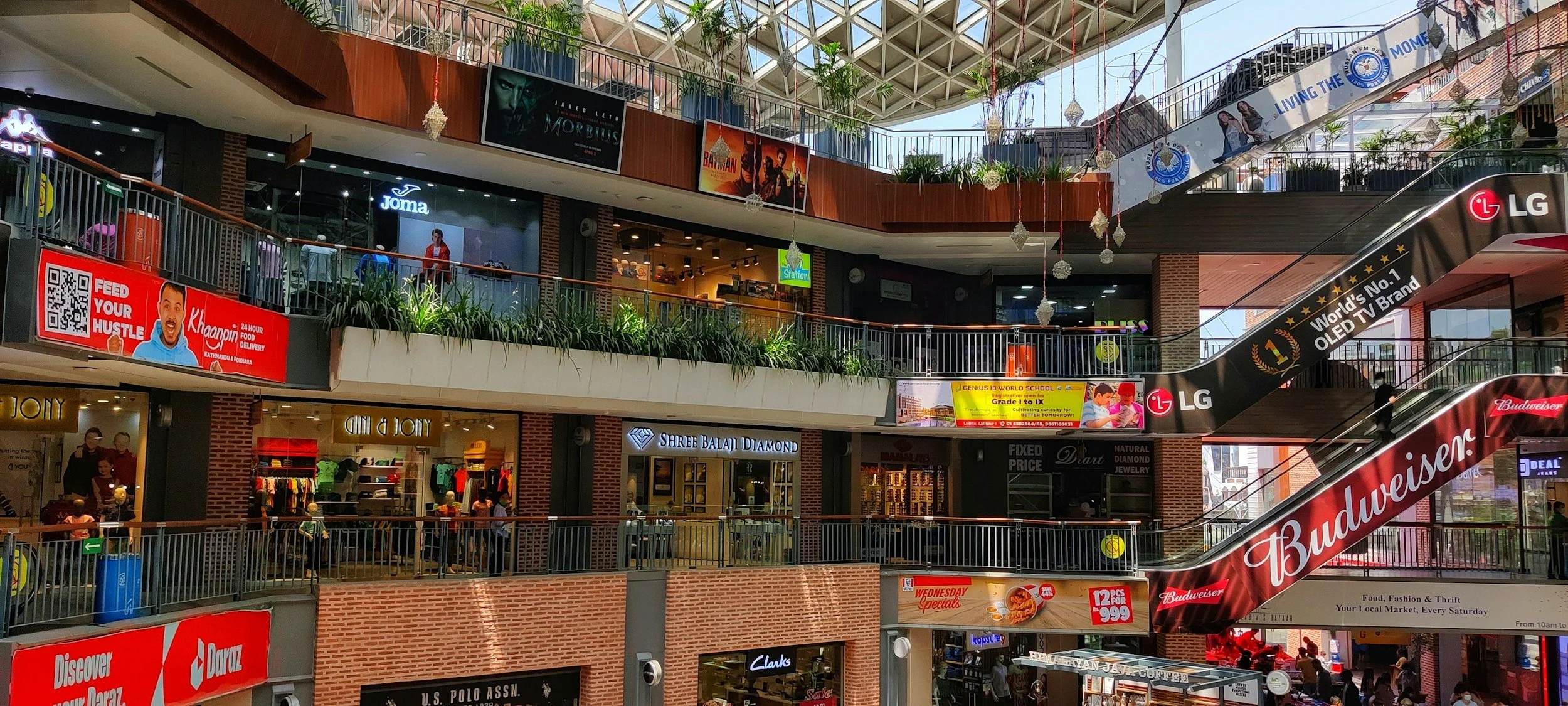
The sector is healthy in aggregate. But "the sector" does not pay your rent — individual tenants do. This week produced an unusually clear read on which retail formats are winning.
Domino's reported Monday. Revenue rose 4.3% to $1.19 billion, and the company grew order counts in both delivery and carryout during a quarter management described as pressured for the broader quick-service industry. Net 209 new stores globally, 26 in the U.S. Value-priced, food-away-from-home, carryout-friendly format: expanding.
Tractor Supply reported Thursday. Net sales rose 2.3% to $4.54 billion, but comparable store sales fell 1.5%. Growth came from new stores rather than existing ones — a materially different signal. Same-store traffic and ticket are under pressure even at a necessity-oriented retailer.
7-Eleven detailed its restructuring: 645 U.S. locations closing or converting this fiscal year — roughly 200 unprofitable closures, 350 conversions to wholesale operations, and about 200 new food-focused stores. That is not a retreat from convenience retail. It is a re-underwriting of which corners still work.
Nike accelerated closures, shutting roughly a dozen U.S. locations in a single month. Staples announced additional August closures.
On the other side of the ledger, Burlington opened a dozen stores this month, is tracking ahead of its plan for 110 net new stores in 2026, and brought a new distribution center online to support the expansion.
The pattern is consistent across every one of these announcements: value, off-price, food, and service formats are expanding. Legacy specialty, office supply, and undifferentiated convenience are contracting.
Right now, format is destiny — more than category, and more than credit rating.
One cost input to monitor: new Section 301 tariffs took effect at 12:01 a.m. Friday covering 60 economies at 10% to 12.5% depending on country of origin, replacing the surcharge that expired. For goods-based tenants, that is a margin question arriving in the back half of the year. For food, service, and medical tenants, it largely is not. That distinction should be shaping how you underwrite renewal risk across your rent roll.
$4 gas is a trade-area tax
The last piece is the one closest to home.
When gasoline jumps 15 cents in a week to $4.09 nationally, the effect on retail is not primarily about how much money consumers have left over. It is about how far they are willing to drive.
Higher fuel costs compress trade areas. Trips consolidate. The discretionary twelve-minute drive to a destination center becomes the four-minute drive to whatever is closest. That is not a theory — it is the mechanic underneath Phillips Edison reporting 2% June traffic growth at close-to-home, necessity-anchored centers while broader discretionary retail softened.
If you own a neighborhood strip center, expensive gasoline is not neutral to you. In the near term, it is frequently a tailwind. You are the convenient option.
And then there is the Texas dimension. At $3.70 a gallon, Texas is the fifth cheapest state in the country — roughly 39 cents below the national average. The statewide average did rise 16 cents this week and sits 93 cents above a year ago, so no one is celebrating. But relative to the rest of the country, consumers in San Antonio, Austin, and the Rio Grande Valley are absorbing meaningfully less of this shock than consumers in most other markets.
For anyone underwriting Texas retail or presenting it to out-of-state capital, that differential is a real and defensible component of the trade-area story. It belongs in the leasing conversation, and it belongs in the offering memorandum.
Three things to do this week
1. Sort your debt into fixed and floating before Wednesday afternoon. Anything floating reprices immediately if the Fed moves. Anything fixed is a maturity-date question — and if you are inside eighteen months on it, call your lender Monday morning. Know your coverage ratio on both.
2. Pull your renewal schedule for the next four quarters. If national grocery-anchored owners are pushing 21% renewal spreads and record 3.1% annual bumps while you are renewing flat, that is not a market problem. It is a negotiating position problem — and it is fixable.
3. Sort your rent roll by format, not by category. Value, food, service, and medical grew this week. Legacy specialty and undifferentiated goods retail are the categories re-underwriting their footprints.
The cost of capital is moving the wrong direction. The quality of income is moving the right direction, and moving faster. Most owners I speak with are watching only one of those two screens.
Watch both.
WATCH OR LISTEN ON YOUTUBE ▶️youtube.com/@RayCREBroker
Ray Kang, CCIM advises private strip center owners across San Antonio, Austin, and the Rio Grande Valley on hold-period strategy and dispositions. If you'd like to talk through what any of this means for a specific property, reach out directly.
Sources
All data cited falls within July 18–25, 2026.
10-Year and 2-Year Treasury yields, July 24, 2026 — ETF Trends
10-Year Treasury at highest level since January 2025 — Trading Economics
Bank Prime Loan Rate 6.75%, July 23, 2026 — Federal Reserve H.15
Bank Prime Loan Rate series (DPRIME) — FRED, Federal Reserve Bank of St. Louis
National gasoline average $4.09, July 23, 2026 — AAA Fuel Prices
Phillips Edison Q2 2026 earnings call highlights, July 24, 2026
Phillips Edison Q2 2026 slides and raised guidance, July 24, 2026 — Investing.com
Tractor Supply Q2 2026 results, Form 8-K, July 23, 2026 — SEC
7-Eleven store closure and conversion plan, July 20, 2026 — TheStreet
Burlington store openings, July 24, 2026 — The Weekly Industry Report
Section 301 tariffs effective July 24, 2026 — Zonos US Tariff Tracker
Deal math is illustrative, modeled on a $4.6M purchase at a 7.0% cap rate with a $3.0M loan at 65% LTV on a 25-year amortization. Lender spread convention of 175–225 bps, trade-area compression mechanics, and Texas market commentary are carried in advisory voice.