Relief at the Pump, Pressure at the Register
Retail Weekend Wrap-Up — Week of May 30, 2026 · By Ray Kang, CCIM
Gas prices finally started falling this week — which should be good news for the tenants in your strip center. But at the very same time, consumer confidence slipped again, and two-thirds of Americans told the Conference Board they're cutting back on spending. So the relief is showing up at the pump, but not yet at the register.
For strip center owners across San Antonio, Austin, and the Rio Grande Valley, that gap is the whole story this week. The single biggest driver of how your center performs from here isn't the headline economy — it's the health of the shopper walking through your tenants' doors. Here's what the data says, and what to do about it.
The consumer is running on savings
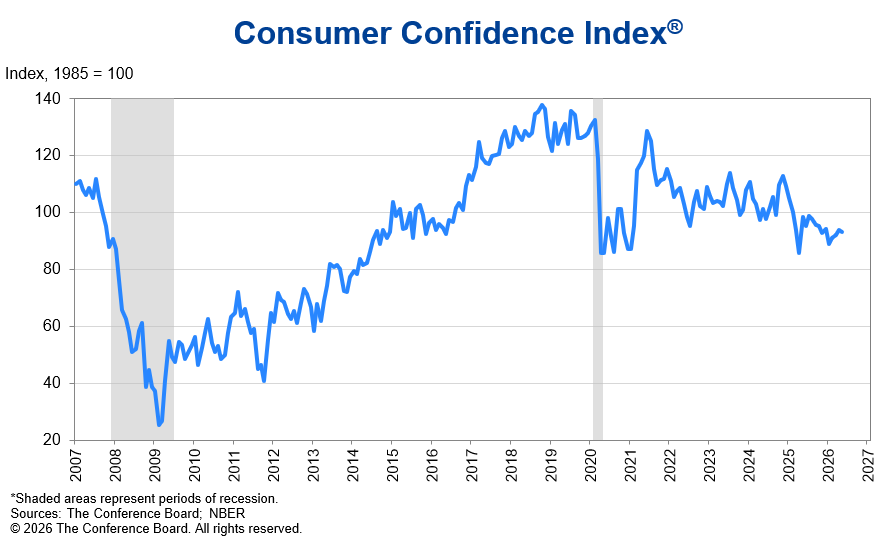
On Tuesday, the Conference Board Consumer Confidence Index slipped to 93.1, down slightly from an upwardly revised 93.8 in April (The Conference Board, May 26). Think of that index as a monthly read on how good people feel about the economy and their own finances. The small dip isn't the point — the composition is. Consumers' view of current conditions fell, and their six-month outlook, while it ticked up, sits at 74.4 — below 80, the threshold the Conference Board has long said tends to precede a recession.
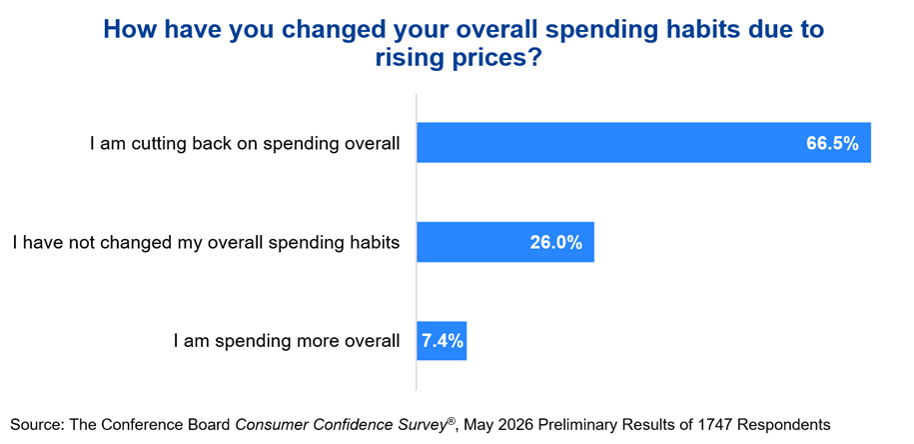
The figure every owner should sit with is in the survey's detail: two-thirds of consumers said they're cutting back on spending because of rising prices, buying fewer items and delaying their bigger purchases.
The government's spending data shows how they're managing it. Inflation in April ran at a three-year high, and the personal saving rate fell to 2.6% — the lowest in nearly four years — while inflation-adjusted spending barely moved (U.S. Bureau of Economic Analysis, April 2026). Read those together and the picture is clear: people are still spending, but increasingly out of their savings, not their paychecks. That isn't the resilient consumer of two years ago — it's a stretched one, and stretched consumers get selective.
Which tenants hold, and which wobble
Here's what makes this week's data unusually actionable: the Conference Board didn't just say people are pulling back — it said where. Consumers reported economizing specifically on clothing and footwear, hobby items, and toys and games. And the categories they're protecting are what the report calls "cheap thrills" and necessities: restaurants and take-out, beauty and personal care, and streaming services.
If you own neighborhood retail, that reads almost like a tenant-by-tenant map. Lay it side by side:
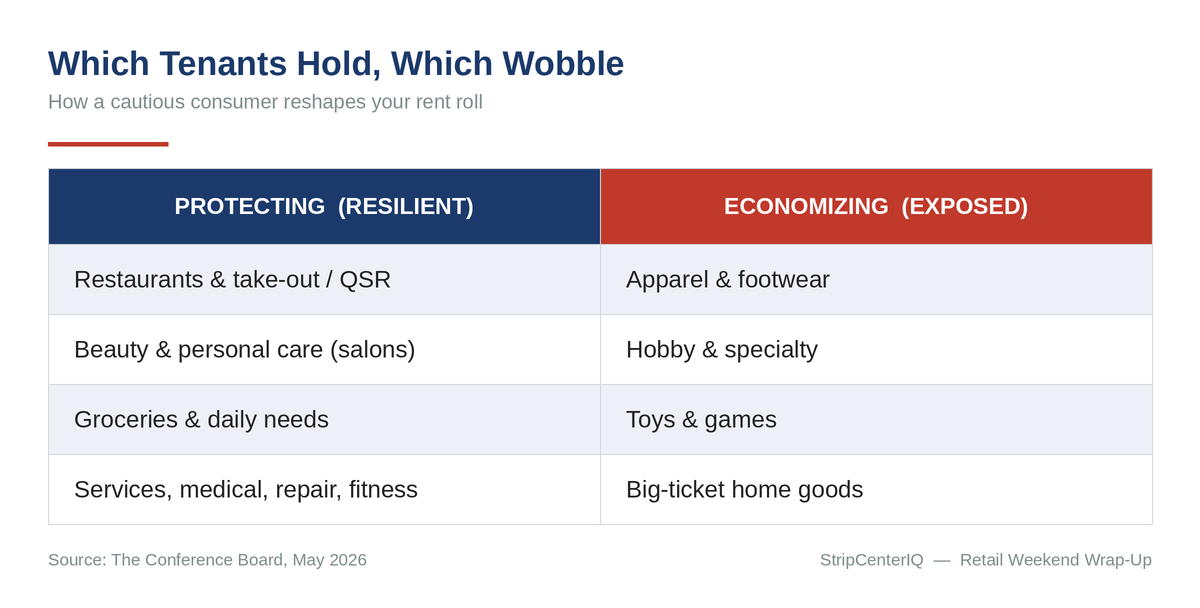
This is precisely why a well-leased, daily-needs strip center holds up when the consumer tightens: the things people protect when money is short — their groceries, their haircut, their nail appointment, the occasional takeout — are the very tenants anchoring your rent roll. The vulnerability sits on the discretionary side: the apparel boutique, the specialty hobby shop, the gift-and-toy concept that depends on spending people are now consciously delaying.
None of this means discretionary tenants are doomed. Plenty are well-run and will weather a soft stretch. The point is to know, tenant by tenant, where your income is durable and where it's exposed — so you're managing the rent roll proactively rather than reacting to a surprise vacancy.
The pump: one real bright spot
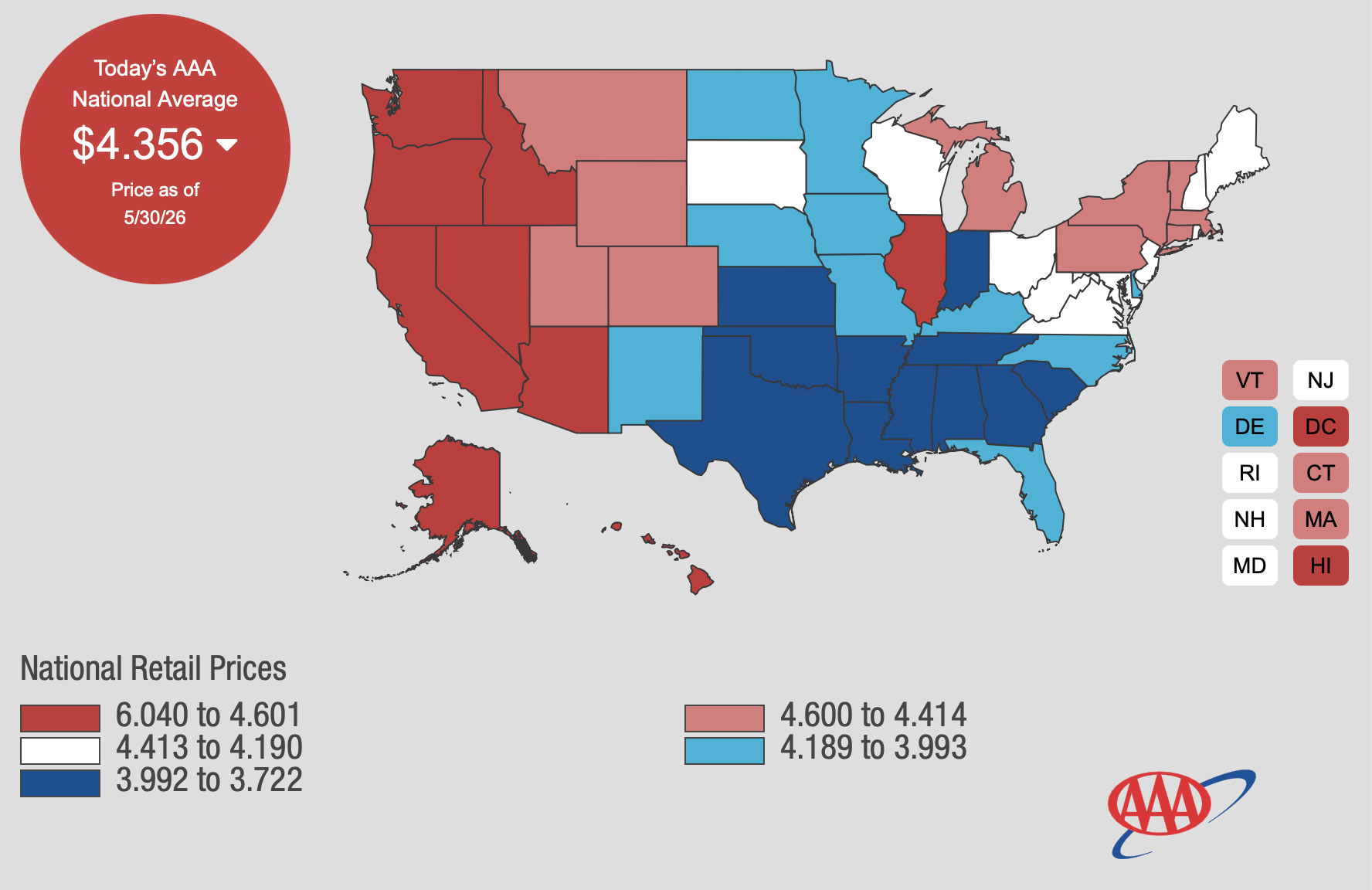
There is genuine good news this week, and it's worth giving its due. Gas fell 12 cents to $4.42 nationally (AAA, May 28), and Texas remains among the cheapest markets in the country at around $4.09. That matters to you directly: every dollar a household doesn't burn at the pump is a dollar that can land at your tenants' registers — especially for the value and "cheap thrills" tenants that benefit most from a little extra room in the weekly budget.
Why is gas falling? Oil just had its worst week since early April as the U.S. and Iran moved toward a 60-day ceasefire (CNBC, May 29). But keep it in proportion: $4.42 is still a four-year high, roughly $1.40 above a year ago, and the Strait of Hormuz — the lane that carries about a fifth of the world's oil — remains largely closed. The relief is real, but partial and fragile; one bad headline can reverse it.
There's also a timing wrinkle worth flagging. The confidence survey's responses were collected through May 19 — before this week's gas drop. So some of the relief at the pump isn't even reflected in that 93.1 reading yet. That makes next month's confidence number one to watch: if cheaper gas filters through to sentiment, it would be an early, encouraging sign for discretionary foot traffic.
The bottom line
Step back and the through-line is simple. The shopper walking into your tenants' stores is more cautious than the headline spending figures make it look — leaning on savings and spending selectively, protecting food and the small luxuries while cutting clothing, hobbies, and toys. Cheaper gas helps at the margin, and it may show up in next month's sentiment data.
But the owners who do well from here won't be the ones trying to forecast gas prices. They'll be the ones who already know exactly which of their tenants sit on the resilient side of that line — and which ones deserve a conversation this quarter. Pull your rent roll, sort it into those two columns, and for anything on the exposed side, get ahead of it: ask for recent sales, check occupancy cost as a share of those sales, and have a renewal-or-re-tenant plan ready before a soft quarter becomes a vacancy.
If you'd like help running that sort on your center — figuring out where your income is solid and where it's exposed, and what to do about it — that's exactly what I do. Reach out anytime.
(On the radar: the Federal Reserve has a new chair, Kevin Warsh, sworn in May 22, with his first meeting June 16–17. We'll cover what his approach means for owners once he's shown his hand.)
Sources (all within the May 22–29, 2026 window): The Conference Board — US Consumer Confidence (May 26) · U.S. Bureau of Economic Analysis — Personal Income & Outlays, April 2026 · AAA Newsroom — gas prices (May 28) · CNBC — oil and the Iran ceasefire (May 29)